How Wholesale Liquidation Pallets Work in the UK
Wholesale liquidation pallets are one of the main ways UK resellers, retailers and traders source stock below retail price, but the mechanics of how a pallet moves from a supplier’s warehouse to a buyer’s doorstep are not always explained clearly. This guide covers where liquidation stock actually comes from, how suppliers and auction platforms operate, how pricing and grading work, what buying as-is means in practice, and the practical trading, storage and compliance considerations a UK buyer needs to think about before ordering a first pallet.
What Is a Wholesale Liquidation Pallet
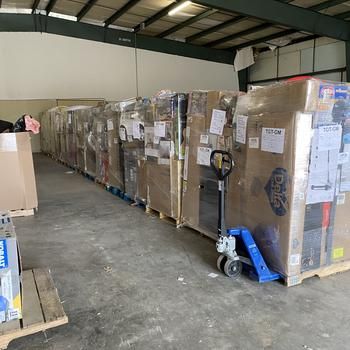
A wholesale liquidation pallet is a bulk lot of merchandise sold by a supplier who needs to move volume quickly, usually at a price well below the combined retail value of the individual items. The stock on a pallet can come from a single brand or category, or it can be a mixed pallet spanning several categories in one lot. What makes it a liquidation pallet rather than a standard wholesale order is the source of the stock, which is typically surplus, returned or clearance merchandise rather than fresh stock ordered directly from a manufacturer’s current catalogue. Buyers take on the sorting, listing and resale themselves, and that work is where the margin sits. The term wholesale lot is often used interchangeably with pallet, though a wholesale lot can technically refer to any bulk quantity of goods sold as one unit, whether or not it is physically stacked on a pallet.
A Short History of Liquidation Trading in the UK
Liquidation trading has existed in some form for as long as retail has produced surplus and returned stock, but the modern wholesale liquidation pallet market grew substantially alongside the rise of online retail. As e-commerce return rates climbed, retailers needed a faster route to move returned and unsold stock than traditional clearance sales or in-store markdowns, which created demand for dedicated liquidation suppliers and auction platforms. What was once a fairly informal trade conducted through direct relationships between retailers and a small number of wholesale buyers has become a more structured market, with dedicated liquidation companies, online auction platforms and pallet resellers operating across the UK to serve everyone from large-scale importers down to individual eBay sellers.
Types of Liquidation Suppliers
Liquidation stock reaches the market through a few different types of supplier, and knowing which type sits behind a given pallet helps a buyer judge what to expect. Manufacturers sometimes liquidate stock directly, usually discontinued lines, packaging changes, or production overruns, and this stock tends to be new and unused. Retailers liquidate stock through their own returns, overstock and shelf-pull processes, often working with a small number of trusted liquidation partners rather than selling publicly. Third-party liquidation companies buy stock in bulk from manufacturers and retailers and then resell it on to traders and resellers, either through fixed-price pallet listings or through auction-style platforms. Each type of supplier has a different incentive structure, and a manufacturer clearing a discontinued line behaves differently from a retailer offloading a backlog of customer returns.
How Liquidation Auctions and Marketplaces Work
Alongside fixed-price pallet listings, a meaningful share of UK liquidation stock moves through auction-style marketplaces, where multiple buyers bid on a listed lot and the highest bid wins the pallet. Auction platforms suit buyers comfortable assessing a manifest quickly and pricing their maximum bid against expected resale value, since the final price is not fixed in advance. Fixed-price listings, by contrast, suit buyers who want cost certainty before committing, which is generally the more straightforward route for anyone new to liquidation buying. Neither model is inherently better, but a first-time buyer is usually better served starting with fixed-price pallets until they have a solid feel for how to value a manifest, since auction bidding rewards fast, confident pricing judgement that comes with experience.
Where Liquidation Stock Comes From
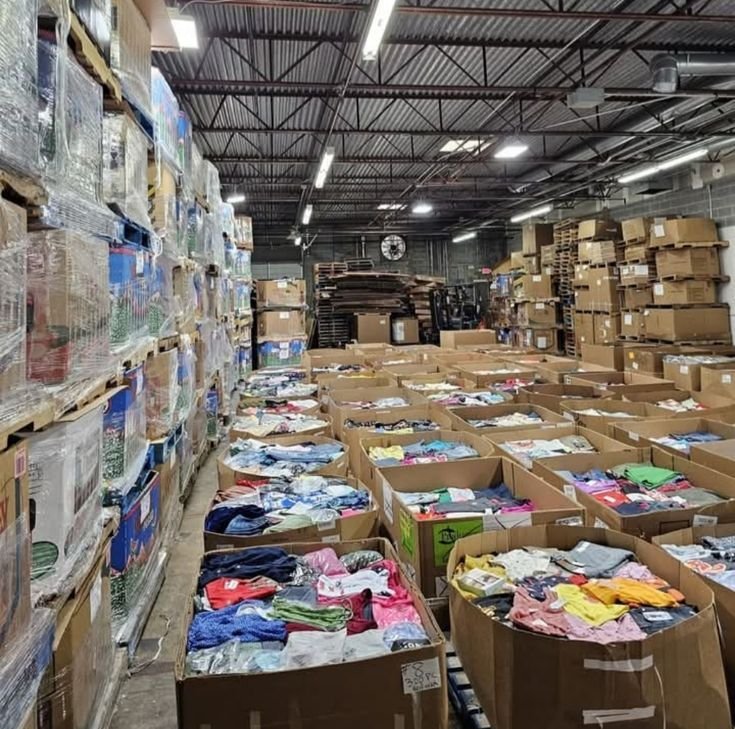
Liquidation stock enters the wholesale market through a handful of common routes, and understanding which route a given pallet came from tells a buyer a lot about what to expect inside it.
Customer returns are goods sent back by consumers after purchase, whether for change of mind, a fault, or simply because an online order did not fit or suit them. Returns stock is often unused or lightly used, but retailers rarely have the resources to fully test and repackage every returned item, so condition varies piece by piece rather than across the whole lot.
Overstock is unsold inventory a retailer or manufacturer needs to clear, usually because a season ended, a product line was discontinued, or forecasting simply overshot demand. Overstock is generally new and unused, since it was never actually sold to a consumer in the first place.
Shelf-pulls are items pulled from a shop floor to make room for new stock, a new season’s range, or a store refit. Like overstock, shelf-pulls tend to be in new or near-new condition, though packaging can show handling wear from having been on display.
Salvage stock comes from damaged shipments, warehouse incidents, or stock that failed some part of a retailer’s own quality check without being unsellable. Salvage lots carry the widest condition range of the four categories and need the most careful manifest reading before purchase.
Clearance stock sits somewhere between overstock and shelf-pulls, made up of goods a retailer has deliberately marked down and moved out to make room for new ranges rather than stock that failed a quality check or was returned by a customer. Clearance lots are usually new, complete and correctly sized, which is part of why they tend to price higher than salvage or mixed-condition returns lots of similar volume.
Choosing a Reliable Liquidation Supplier
Not every supplier calling themselves a liquidation wholesaler operates to the same standard, and a buyer’s experience depends heavily on who they choose to buy from. A reliable supplier publishes a genuine, itemised manifest rather than a vague category description, states its grading system clearly rather than leaving condition to guesswork, and is contactable directly if a buyer has a question about a specific listing before ordering. Buyers should be cautious of listings that promise unusually high resale returns without backing that claim with any manifest detail, since that combination, a vague description paired with an inflated value claim, is one of the more common patterns behind poor-quality liquidation purchases. Checking a supplier’s own trading history, how long they have operated, and whether they are transparent about the source of their stock, whether that is customer returns, overstock or salvage, is time well spent before committing to a first order.
Categories of Liquidation Stock in the UK Market
Wholesale liquidation pallets cover a wide spread of categories, and each behaves differently in terms of pricing, resale speed and buyer expertise required. Clothing pallets and liquidation clothing lots range from single-brand pallets with a full manifest through to broad mixed clothing pallets covering multiple brands and sizes, and tend to suit resellers already comfortable pricing fashion and activewear resale. Electronics pallets and mixed electronics lots cover everything from small consumer electronics through to larger appliance pallets, and generally demand more category knowledge from the buyer, since functional condition and completeness matter more here than in most other categories. General merchandise pallets and mixed merchandise lots span household goods, toys, DIY and garden items, homeware and similar categories in a single lot, suited to buyers such as discount stores and general resellers who sell across a broad range rather than one specialism. Footwear pallets sit alongside clothing in demand terms, with branded trainers and shoes carrying strong resale value on platforms like eBay and Vinted. Tools and DIY pallets have a smaller but consistent buyer base among tool resellers, DIY retailers and independent trade buyers, since branded power tools and hand tools hold resale value well even in used condition.
How Grading Works
UK liquidation suppliers commonly grade stock using a simple Grade A, B or C system, though the exact definitions can vary slightly between suppliers. Grade A generally means new or like-new condition with original packaging intact. Grade B typically covers stock that is functional and largely complete but shows some sign of use, damaged packaging, or missing accessories. Grade C usually describes stock with more significant wear, cosmetic damage, or incomplete sets, sold at the lowest price point to reflect that condition. A buyer should always check what grading system a specific supplier uses rather than assuming it matches another supplier’s definitions, since there is no single enforced industry standard behind these letters, and a Grade B pallet from one supplier is not automatically equivalent to a Grade B pallet from another.
Why Liquidation Pallets Are Priced Below Retail
The pricing logic behind a wholesale liquidation pallet is straightforward once you separate it from retail pricing altogether. A retailer or manufacturer holding returned, surplus or shelf-pulled stock has already written off the expectation of selling it at full price through normal retail channels. Moving it through a liquidation pallet at a fraction of MSRP converts stagnant inventory into cash and frees up warehouse space, even at a fraction of the original retail value. That is why estimated MSRP figures quoted on a pallet listing represent the retail value of the goods if sold individually and new, not a guaranteed resale price, and buyers should treat that distinction carefully when working out their own margin expectations.
How Manifests Work and Why They Matter
A manifest is the itemised list of everything included in a pallet, typically broken down by product, colour or variant, and quantity. A detailed manifest is the single most useful tool a buyer has for assessing a pallet before purchase, because it turns a vague category description into a concrete list that can be checked against current resale prices for each line. Pallets sold without a manifest, or with only a rough category estimate rather than line-by-line detail, carry considerably more pricing risk, since the buyer has no way to verify what they are actually getting until the pallet arrives. Buyers working from a manifest should also check that the numbers on it actually add up. Manifests compiled by hand occasionally contain arithmetic errors, a stated total that does not match the sum of the individual lines, or a category summary that contradicts the itemised list. Any of these is worth querying with the supplier before ordering rather than after, since a supplier confident in their own stock will usually be able to confirm or correct the figures quickly.
Evaluating a Pallet Before You Buy
Beyond checking that the manifest adds up correctly, a buyer evaluating a pallet should look at a few other things before committing. The first is category fit: a pallet priced attractively in a category the buyer has no resale experience in is often a worse purchase than a slightly more expensive pallet in a category they already understand, since pricing mistakes cost more than the difference in purchase price. The second is checking current resale prices for a sample of the higher-quantity lines on the manifest, rather than relying purely on the estimated MSRP, since MSRP reflects original retail value rather than what similar items are actually achieving in resale right now. The third is confirming the stated condition or grading against what the buyer actually needs, since a pallet graded for parts or salvage suits a very different resale plan than one graded new or like-new. Buyers who skip this evaluation step and buy purely on headline price are the ones most likely to be disappointed with a pallet’s real resale outcome.
Calculating Real Margin: A Worked Example
Working out real margin on a pallet purchase means starting from the purchase price, not the estimated MSRP. As an illustrative example only, a pallet bought for a hypothetical five hundred pounds with an estimated MSRP of two thousand pounds is not automatically a bargain, since the actual resale return depends on what the items sell for, not on the gap between purchase price and original retail value. If that same hypothetical pallet realistically resells at around twenty to thirty per cent of its estimated MSRP, a common range for liquidation stock sold individually online, that puts realistic gross proceeds somewhere between four hundred and six hundred pounds before accounting for listing time, platform fees, packaging and any unsold stock. Once those costs are factored in, a pallet that looked highly profitable on the MSRP figure alone can end up close to break-even. This is why treating the resale scenario, not the MSRP total, as the number that actually matters is the single most useful habit a liquidation buyer can build.
Photography and Listing Considerations for Resale
How a buyer photographs and describes stock from a pallet has a direct effect on how quickly it sells and at what price, regardless of the category. Clean, well-lit photographs against a plain background consistently outperform rushed phone photos taken in poor lighting, particularly for clothing and footwear where fit and condition are hard to judge from a bad image. Listings should describe condition honestly rather than defaulting to generic terms like new or excellent unless that is actually accurate for the specific piece, since inaccurate condition descriptions lead directly to returns, complaints and negative feedback on resale platforms. Buyers working through a large pallet often batch this process, photographing and listing similar items together to save time, which is one of the practical reasons single-category or single-brand pallets tend to be faster to process than a highly varied mixed lot.
How to Price Resold Stock Competitively
Pricing stock from a liquidation pallet works best when anchored to recently sold listings for the same or similar items, rather than to the estimated MSRP or to what other sellers are currently asking but have not yet sold at. Marketplaces such as eBay allow sellers to filter search results to sold listings specifically, which gives a much more realistic picture of achievable price than active listings do, since active listings often sit unsold at optimistic prices for weeks. Buyers pricing branded stock from a single-brand pallet have an advantage here, since sold price history for a well-known brand and style is usually easy to find, whereas unbranded or generic items require more guesswork and a greater willingness to adjust price based on how quickly, or slowly, similar listings move.
Buying As-Is: What It Means in Practice
Wholesale liquidation pallets are almost always sold on an as-is, final sale basis, meaning the buyer accepts the stock in whatever condition the manifest describes, with no return or refund once the order has been placed. This is standard across the liquidation trade in the UK and is not unique to any one supplier. It places the burden of due diligence on the buyer before purchase rather than after delivery, which is why reading the manifest and any stated condition grading carefully matters more here than it would with a standard retail purchase, where consumer return rights apply in a way they generally do not for wholesale trade purchases.
VAT and Trading Considerations for UK Buyers
Buyers purchasing wholesale liquidation pallets as a business should factor VAT into their own cost and pricing calculations, and should register for VAT once their turnover crosses the threshold set by HMRC, which is reviewed periodically. Buyers should also keep proper records of pallet purchases and resale income for their own accounting and tax reporting, in the same way they would for any other stock-based trading activity. This guide is not a substitute for proper accounting or tax advice, and buyers should speak to an accountant or check current HMRC guidance directly for figures and rules that apply to their specific circumstances, since these can change.
Product Safety, Trading Standards and Consumer Rights When Reselling
Anyone reselling goods to UK consumers, including stock sourced from liquidation pallets, takes on general obligations around product safety and accurate description that apply to any business selling to the public. Electrical and electronic items in particular fall under WEEE (Waste Electrical and Electronic Equipment) regulations, which place recycling and compliance responsibilities on businesses placing electricals on the market. Sellers should also describe stock accurately in their own listings, including condition, so that what a consumer receives matches what was advertised, since general consumer protection expectations around accurate description apply regardless of where the seller originally sourced the stock. This is general awareness information rather than legal advice, and resellers, particularly those handling electronics, toys or anything with a safety component, should check current UK trading standards guidance for their specific category before listing stock for sale.
Storage and Logistics Considerations
Before ordering a pallet, buyers need somewhere suitable to receive, unload and store it. A standard pallet typically requires a flat, dry storage area and, depending on weight, may need a pallet truck or forklift to move safely, which is worth arranging before delivery rather than on the day. Buyers working from a domestic garage or spare room should check the physical dimensions and weight of a pallet against their own access and storage capacity, since not every residential delivery address can accommodate a full pallet easily. Buyers scaling beyond occasional single-pallet purchases toward regular or truckload volumes should plan for dedicated storage space in advance, since inventory that cannot be properly stored and accessed quickly becomes harder to sort, photograph and list efficiently.
Import Considerations for Overseas Sourced Pallets
Some UK buyers source pallets from suppliers based outside the UK, in which case import duty and import VAT may apply on arrival, in addition to any shipping cost. These charges are calculated by HMRC and the courier or freight handler at the point of import, not set by the liquidation supplier, so buyers sourcing internationally should factor potential import costs into their overall purchase price before comparing it against a UK-based pallet of similar content. Buyers unfamiliar with import procedures should check current HMRC guidance or speak to a customs broker before committing to a large overseas order, since getting this wrong can turn an apparently cheaper overseas pallet into a more expensive purchase once import charges are added.
Seasonal Trends and Stock Availability
Liquidation stock availability follows retail’s own seasonal patterns fairly closely. The period after Christmas typically brings a surge in customer returns stock across clothing, electronics and general merchandise, as consumers return unwanted gifts and retailers process a spike in volume all at once. End-of-season clothing clearance tends to peak twice a year, as retailers clear summer stock in early autumn and winter stock in early spring. Back-to-school periods can produce overstock in categories like electronics, stationery-adjacent general merchandise and children’s clothing. Buyers who track these patterns can time purchases to when a category they specialise in is most likely to be well supplied, rather than buying reactively whenever a pallet happens to appear.
Single-Brand Pallets vs Mixed Pallets
A single-brand pallet, built entirely around one recognised brand with a full manifest, gives a buyer more pricing confidence than a generic mixed clothing pallet, since resale value for a known brand’s individual lines is usually easier to research and verify in advance. Mixed-brand pallets can still offer strong value, particularly for buyers who want variety or who are pricing purely on category rather than brand recognition, but they generally require more manifest scrutiny line by line, since brand mix and quality can vary considerably between suppliers and even between pallets from the same supplier.
Mixed Pallets vs Single-Category Pallets
Mixed pallets combine several product categories in one lot, which suits buyers who want variety or who resell to a broad customer base such as a discount shop floor or a general market stall. Single-category pallets, such as a clothing-only or electronics-only lot, suit buyers who already specialise in that category and can price and list stock quickly because they know the resale market for it. Neither type is inherently better value, and the right choice depends entirely on the buyer’s own resale channel and existing category knowledge rather than on the pallet’s price alone.
Pallets vs Truckloads
A single pallet is the standard unit for most first-time and small-scale buyers, typically running from under a hundred to a few hundred pieces depending on the category. A truckload is a much larger volume, made up of multiple pallets, and usually suits buyers who already have proven sell-through on smaller lots and the storage capacity to hold a larger volume of stock at once. Moving from pallets to truckloads is generally a step taken once a buyer has tested their resale process and pricing on a smaller scale first, rather than a starting point for someone new to liquidation buying.
Who Buys Wholesale Liquidation Pallets in the UK
The buyer base for liquidation pallets is broad. Online resellers running eBay, Vinted, Depop or Instagram shops buy pallets to list piece by piece to individual consumers. Independent retailers, discount stores and outlet shops buy larger mixed pallets to stock a physical shop floor at a lower cost base than ordering fresh stock. Wholesale traders and job lot buyers deal in bulk stock as their core business, often reselling pallets on again in smaller lots to other traders. Market stallholders and car boot sellers buy smaller, lower-cost pallets suited to face-to-face selling. Electronics resellers, tool resellers and clothing resellers each tend to specialise in pallets matched to their existing category expertise, since knowing the resale value of a category in advance is what makes pallet buying profitable rather than speculative.
Where UK Buyers Resell Liquidation Stock
Resale channels vary by category. Clothing and footwear tend to move well through Vinted and Depop, both of which have strong UK bases of buyers looking for branded secondhand and liquidation stock. Electronics, tools and general merchandise typically sell faster through eBay or a dedicated online store. Independent retailers and stallholders resell physically through their own premises or market pitches rather than online. None of these platforms are affiliated with or endorse any particular liquidation supplier, and sellers should check each platform’s own listing policies and fees before relying on it as a resale channel.
Building a Repeatable Liquidation Buying Business
A single pallet purchase is a one-off flip. A repeatable business comes from buying on a consistent schedule, tracking actual resale prices achieved against the original cost per piece rather than the estimated MSRP, and reinvesting a fixed portion of proceeds into the next lot rather than spending all of it. Buyers who treat manifest reading, pricing and sorting as a repeatable process, rather than reacting to whatever pallet looks cheapest at the time, are the ones who build a sustainable trade rather than a series of unconnected purchases.
Common Mistakes New Buyers Make
New buyers most often underestimate the time cost of sorting, photographing and listing a full pallet, which eats into margin just as much as the purchase price does. Pricing purely against the estimated MSRP rather than checking current sold listings for comparable items is another common error, since MSRP reflects original retail value rather than realistic resale demand. Buying pallets outside a buyer’s own category expertise, purely because the price looks attractive, also tends to produce slower-selling stock than buying within a category the buyer already understands. A further common mistake is buying a second or third pallet before clearing meaningful stock from the first, which ties up cash and storage space in unsold inventory rather than in new purchases that could actually move.
The Environmental Case for Liquidation Trading
Liquidation trading serves a practical environmental function alongside its commercial one, since it gives returned, surplus and shelf-pulled stock a route back into use rather than into landfill or incineration. Stock that would otherwise be written off as unsellable gets a second life through resale, which reduces overall waste from the retail supply chain. This is a genuine secondary benefit of the trade rather than its primary purpose, but it is a reasonable point buyers and resellers can draw on when talking about the wider value of what they do.
Glossary of Common Liquidation Trade Terms
Manifest is the itemised list of everything included in a pallet, broken down by product, variant and quantity. MSRP stands for manufacturer’s suggested retail price, the original full retail value of an item before any discounting. Overstock is unsold inventory a retailer or manufacturer needs to clear. Customer returns are goods sent back by consumers after purchase. Shelf-pulls are items removed from a shop floor to make way for new stock. Salvage refers to stock affected by damage, warehouse incidents, or failed quality checks. Wholesale lot and job lot both describe a bulk quantity of goods sold as one unit, whether or not the term pallet specifically applies. Grade A, B or C describes a supplier’s own condition grading, from new or like-new down to more significant wear or damage. Sold by the piece describes stock priced and sold individually after purchase, as opposed to sold in bulk. Truckload refers to a much larger volume than a single pallet, typically made up of multiple pallets moved together.
Frequently Asked Questions
What is the difference between a liquidation pallet and a normal wholesale order? A normal wholesale order is usually fresh stock bought directly from a manufacturer’s current catalogue, while a liquidation pallet is made up of surplus, returned or clearance stock sold below its original retail value.
Is liquidation stock always used or damaged? No, liquidation stock ranges from new and unused overstock or shelf-pulls through to used customer returns and salvage stock, and condition depends entirely on the source and grading of the specific pallet.
Can I return a pallet if it is not what I expected? Generally no, since wholesale liquidation pallets are sold as-is and final sale in line with standard trading terms across the industry.
What does Grade A, B or C actually mean? Grading systems vary between suppliers, but broadly Grade A means new or like-new, Grade B means functional with some wear or incomplete packaging, and Grade C means more significant wear or damage.
Do I need to register as a business to buy wholesale liquidation pallets? Requirements vary by supplier, but buying and reselling stock as a regular activity is generally treated as trading, and buyers should speak to an accountant about their own VAT and tax obligations.
How do I know if a pallet’s manifest is accurate? Check that the individual line items add up to the stated total, and query any supplier whose manifest totals do not reconcile before placing an order.
What is the difference between a pallet and a truckload? A pallet is a single unit typically running from under a hundred to a few hundred pieces, while a truckload is a much larger volume made up of multiple pallets.
Which liquidation categories sell fastest in the UK? This varies by buyer and channel, but branded clothing, footwear and consumer electronics generally see strong resale demand through platforms like eBay, Vinted and Depop.
Is buying wholesale liquidation pallets profitable for a complete beginner? It can be, but new buyers should expect a learning curve around pricing, sorting and listing time before margins become consistent, and starting with a category they already understand tends to produce better early results than choosing purely on price.
Do liquidation pallets come with any warranty on electronics or appliances? Generally no, since pallets are sold as-is, and any manufacturer warranty that would normally apply to a new item is unlikely to transfer through a liquidation sale unless the supplier states otherwise.
Insurance and Risk Management for Larger Purchases
Buyers moving beyond occasional single-pallet purchases toward regular buying or truckload volumes should also think about insurance for stock held in storage, since a warehouse fire, flood or theft affecting uninsured inventory can undo months of otherwise profitable trading in one incident. Standard home contents insurance typically does not cover stock held for resale, so buyers storing meaningful inventory value at a domestic address should check their policy or consider dedicated stock insurance rather than assuming existing cover applies. This becomes more important as purchase volume grows, since the financial exposure of a single pallet is manageable if lost, but the exposure of several months’ worth of stock held at once is not.
Final Point
Wholesale liquidation pallets offer real margin for buyers who read the manifest carefully, understand the source and grading of the stock they are buying, and price against actual resale demand rather than original retail value. The buyers who do best in this trade are consistently the ones treating pallet buying as a process to refine over time, backed by proper storage, accurate record keeping and category expertise, rather than a one-off bargain to chase.